
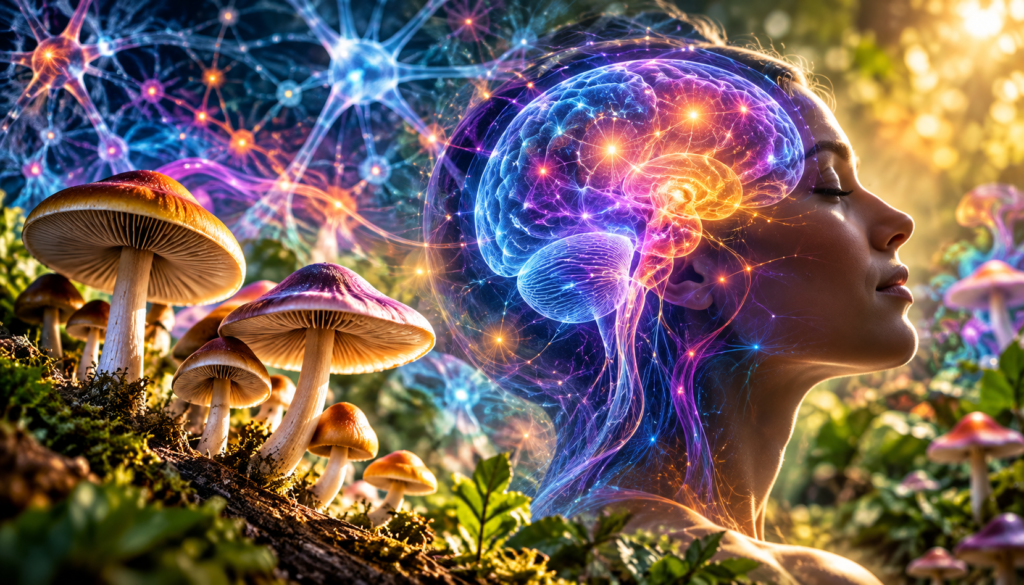
Psilocybin, the naturally occurring psychedelic compound found in certain species of mushrooms, has become an important subject of modern neuroscience and mental health research. Scientists are increasingly investigating how psilocybin changes perception, emotion, brain communication, and patterns of thought. Although psychedelic mushrooms have a long history of traditional use, researchers are only beginning to understand the complex relationship between Psilocybin and The Brain.
After ingestion, psilocybin is converted by the body into psilocin, the compound primarily responsible for its psychoactive effects. Psilocin interacts strongly with the brain’s serotonin system, temporarily changing how different neural networks communicate. These changes can produce altered sensory perception, intensified emotions, unusual patterns of thought, and a changed sense of self and time.
At the same time, clinical research is examining whether carefully controlled psilocybin-assisted therapy could have potential benefits for certain psychiatric conditions. These findings are promising in some areas, but psilocybin also carries meaningful psychological and physical risks and should not be viewed as a proven treatment for every condition.
What Is Psilocybin?
Psilocybin is a naturally occurring psychedelic substance found in more than 200 species of fungi. Once consumed, it is rapidly converted into psilocin, which can cross the blood-brain barrier and interact with serotonin receptors.
One of the most important targets is the serotonin 2A, or 5-HT2A, receptor. These receptors are widely distributed throughout areas of the brain involved in cognition, perception, mood, and self-awareness.
Activation of these receptors contributes to many characteristic psychedelic effects, including visual alterations, intensified colors, changes in sound perception, unusual associations between ideas, emotional shifts, and changes in the subjective experience of time.
Understanding this serotonin interaction provides an important starting point for studying Psilocybin and The Brain.
How Does Psilocybin Affect the Brain?
The effects of psilocybin extend beyond simply activating a single type of serotonin receptor. Neuroimaging research suggests psychedelics can temporarily alter communication both within and between major brain networks.
Ordinarily, different networks specialize in particular functions. During the psychedelic state, some established patterns of communication may become less rigid while communication between areas that do not normally interact as strongly can increase.
Researchers sometimes describe this as increased global brain connectivity or greater neural complexity. This does not mean the brain simply becomes “more powerful.” Rather, its normal organization temporarily changes.
These alterations may help explain why a psilocybin experience can involve unusual thoughts, vivid imagery, emotional intensity, and unexpected connections between memories and ideas.
Psilocybin and the Default Mode Network
One particularly interesting area of Psilocybin and The Brain research involves the default mode network (DMN).
The DMN is a collection of interconnected brain regions associated with self-referential thinking, autobiographical memory, daydreaming, and aspects of our sense of identity.
Research suggests psychedelic drugs can temporarily disrupt or reduce the usual integrity of this network. At the same time, communication between other regions may become less constrained.
These changes have been proposed as one possible neurological explanation for “ego dissolution,” a phenomenon in which the normal distinction between oneself and the surrounding world may temporarily feel reduced.
However, individual experiences vary dramatically. Not everyone experiences ego dissolution, and an intense loss of ordinary self-perception can be frightening rather than positive.
Psilocybin, Serotonin, and Perception
Serotonin plays an important role in mood, cognition, sensory processing, sleep, and numerous other functions.
Psilocin’s activity at 5-HT2A receptors can alter how the brain processes incoming information. Ordinary sensory experiences may therefore feel significantly different.
Colors can appear more vivid, patterns may seem to move, music can feel unusually immersive, and everyday objects may take on unfamiliar visual characteristics. Some people also report synesthesia-like experiences, such as perceiving sounds as having visual qualities.
Changes in sensory processing demonstrate why research into Psilocybin and The Brain extends beyond mood alone. Psychedelics temporarily influence fundamental mechanisms involved in how humans construct their perception of reality.
How Psilocybin May Affect Emotions
Emotional changes are another major feature of the psilocybin experience.
People may experience intense happiness, wonder, connectedness, introspection, sadness, fear, or combinations of different emotions during the same experience.
Clinical researchers are investigating whether the combination of altered emotional processing and structured psychotherapy could help some patients approach difficult thoughts or experiences differently.
This research is particularly relevant to depression and anxiety. Some clinical studies have reported rapid improvements in symptoms following psilocybin-assisted therapy under carefully controlled conditions.
Importantly, these studies generally involve screening, professional supervision, controlled doses, psychological preparation, and follow-up integration. Their results should not automatically be generalized to unsupervised recreational use.

Psilocybin and Neuroplasticity
Another emerging research area concerns neuroplasticity—the brain’s ability to modify connections and adapt in response to experience.
Laboratory and preclinical research suggests serotonergic psychedelics may promote biological processes associated with neural plasticity. Scientists are studying whether these changes could create a temporary period during which certain patterns of thought and behavior become more flexible.
This concept is sometimes described as opening a “window” of increased psychological flexibility.
Researchers have proposed that such flexibility might partly explain why psychedelic-assisted psychotherapy is being investigated for persistent patterns associated with depression, addiction, and other psychiatric conditions.
However, research into these mechanisms is still developing. Claims that psilocybin permanently “rewires” or “resets” the brain oversimplify a much more complicated scientific picture.
Potential Mental Health Benefits Being Studied
Research into Psilocybin and The Brain has expanded significantly because of potential therapeutic applications.
One of the most extensively studied areas is depression, particularly treatment-resistant depression and major depressive disorder. Clinical trials have reported reductions in depressive symptoms among some participants following professionally supervised psilocybin sessions.
Researchers are also investigating psilocybin-assisted therapy for anxiety and depression associated with serious illness, as well as alcohol use disorder, tobacco dependence, obsessive-compulsive disorder, and other conditions.
The important distinction is that researchers generally study psilocybin as part of a structured therapeutic intervention rather than simply administering mushrooms and expecting symptoms to disappear.
Psychological preparation, the environment in which the psychedelic experience occurs, professional support, and post-session integration may all influence outcomes.
Psilocybin and Psychological Flexibility
One particularly interesting hypothesis is that psilocybin may temporarily make established thought patterns less rigid.
People frequently develop habitual ways of interpreting themselves, their relationships, and their surroundings. Some psychiatric conditions can involve especially persistent negative or repetitive patterns.
By temporarily altering ordinary brain-network organization, psilocybin may allow thoughts and emotions to be experienced from different perspectives.
This could potentially be beneficial when combined with appropriate psychological support. However, greater mental flexibility is not automatically positive. The same altered state can produce confusion, anxiety, paranoia, or overwhelming emotional experiences.
Context therefore matters enormously.
The Importance of Set and Setting
Discussions about Psilocybin and The Brain frequently include the concepts of “set and setting.”
“Set” refers broadly to a person’s mindset, expectations, emotional state, and psychological circumstances. “Setting” refers to the physical and social environment surrounding the experience.
A stressful environment or unstable emotional state can contribute to anxiety or frightening experiences. Conversely, clinical trials generally use calm environments and trained professionals to reduce risk and provide reassurance when difficult emotions arise.
This difference is important when interpreting scientific research. Results obtained under professionally supervised clinical conditions cannot necessarily predict what will happen during unsupervised use.
Risks and Important Considerations
Psilocybin is not risk-free.
Possible acute effects include nausea, dizziness, increased heart rate or blood pressure, anxiety, confusion, panic, and impaired judgment. Perceptual and cognitive changes can also create safety risks if someone attempts to drive, swim, operate machinery, or navigate hazardous environments while intoxicated.
Psychological reactions can sometimes become extremely distressing. People with certain psychiatric histories may face additional risks, which is one reason clinical studies use careful participant screening.
Psilocybin can also interact with medications, and its legal status differs substantially between jurisdictions.
Anyone considering psilocybin for a mental health concern should therefore distinguish between emerging clinical evidence and self-treatment. A qualified healthcare professional can help assess individual risks and evidence-based treatment options.

What the Future of Psilocybin Research May Reveal
The relationship between Psilocybin and The Brain remains an evolving area of neuroscience.
Advanced brain imaging, controlled clinical trials, and molecular research are helping scientists understand how psychedelics affect serotonin signaling, neural networks, emotional processing, and neuroplasticity.
Future studies should provide clearer answers about which patients might benefit, which conditions respond best, how long potential benefits persist, and how psychological support contributes to treatment outcomes.
Researchers also need to better understand possible risks, appropriate clinical protocols, and individual differences in psychedelic response.
What is already clear is that psilocybin produces much more than simple hallucinations. It temporarily changes fundamental aspects of perception, cognition, emotional processing, and communication between brain networks.
Final Thoughts on Psilocybin and the Brain
Scientific interest in Psilocybin and The Brain has transformed psychedelics into a serious field of neurological and psychiatric research. Psilocybin’s conversion into psilocin and subsequent activity at serotonin receptors appears to contribute to significant temporary changes in perception, self-awareness, emotion, and brain-network communication.
Early clinical findings suggest that professionally supervised psilocybin-assisted therapy may have potential for certain mental health conditions, but research remains ongoing. These findings should not be interpreted as evidence that unsupervised psychedelic use is universally beneficial or appropriate.
For adults who are legally permitted to purchase psilocybin products in their jurisdiction, BC Medi Chronic offers an online destination for exploring available mushroom-related products. Consumers should verify local laws, carefully review product information, and approach psychedelic substances with particular attention to mental health, medications, environment, and personal safety.