
Cannabis concentrates continue to attract experienced consumers looking for products with concentrated cannabinoids, distinctive textures, and pronounced terpene profiles. Among the many extracts available, shatter and crumble remain two recognizable options. Although they can begin with similar extraction principles, differences in processing and consistency give each concentrate its own characteristics.
The Shatter vs Crumble comparison is about more than appearance. Texture, handling, terpene content, storage, potency, and personal preference can all influence which product someone chooses. Shatter is famous for its translucent, glass-like structure, while crumble has a softer, porous consistency that easily breaks apart.
Neither format is automatically superior. Understanding what separates them can help experienced, legal-age consumers make more informed purchasing decisions.
What Is Cannabis Shatter?
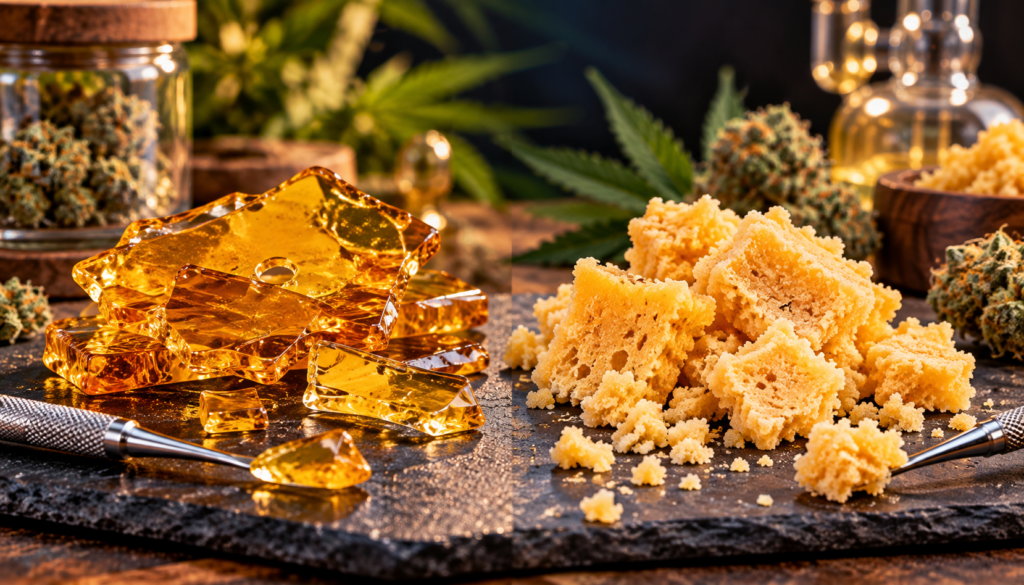
Shatter is a cannabis concentrate recognized for its hard, brittle, often translucent appearance. Depending on the product, it may range from pale golden yellow to darker amber.
Its name comes from its physical characteristics. When properly cooled and handled, a thin sheet of shatter may snap or break into smaller pieces much like brittle glass.
Shatter’s distinctive consistency results from how the extract is processed after extraction. Manufacturers aim to maintain a relatively uniform structure rather than encouraging the softer, aerated consistency associated with concentrates such as wax or crumble.
Appearance can vary significantly between products, however. Transparency and color alone are not reliable indicators of quality. Starting material, cannabinoid composition, terpene content, processing conditions, age, and storage can all affect the finished concentrate.
What Is Cannabis Crumble?
Crumble is another concentrated cannabis extract, but its physical structure is noticeably different.
As its name suggests, crumble has a dry, crumbly, sometimes honeycomb-like consistency. Instead of forming a glassy sheet, it can break into soft fragments when handled.
The texture generally results from differences in post-extraction processing. Variations in temperature, agitation, purging, and moisture can influence the final consistency of cannabis concentrates.
Crumble may range from pale yellow to amber or brown depending on the material and manufacturing process.
For consumers comparing Shatter vs Crumble, texture is usually the most obvious difference. Shatter is generally rigid and brittle, whereas crumble is softer, drier, and easier to break apart.
Shatter vs Crumble: Key Differences
Although both products belong to the broader cannabis concentrate category, they provide different handling and sensory characteristics.
Shatter’s solid structure makes it recognizable and relatively stable under suitable storage conditions. Crumble’s softer consistency can make dividing small portions easier for some consumers, although its loose structure may also make it messier if handled carelessly.
Terpene content can differ as well, but concentrate type alone doesn’t determine flavor.
A well-made shatter can have an expressive terpene profile, while some crumble products may offer particularly pronounced aromas. Genetics, extraction quality, freshness, processing, and storage are more meaningful factors than simply choosing one texture over another.
The same principle applies to potency: either concentrate can be very strong.
Potency: Is Shatter Stronger Than Crumble?
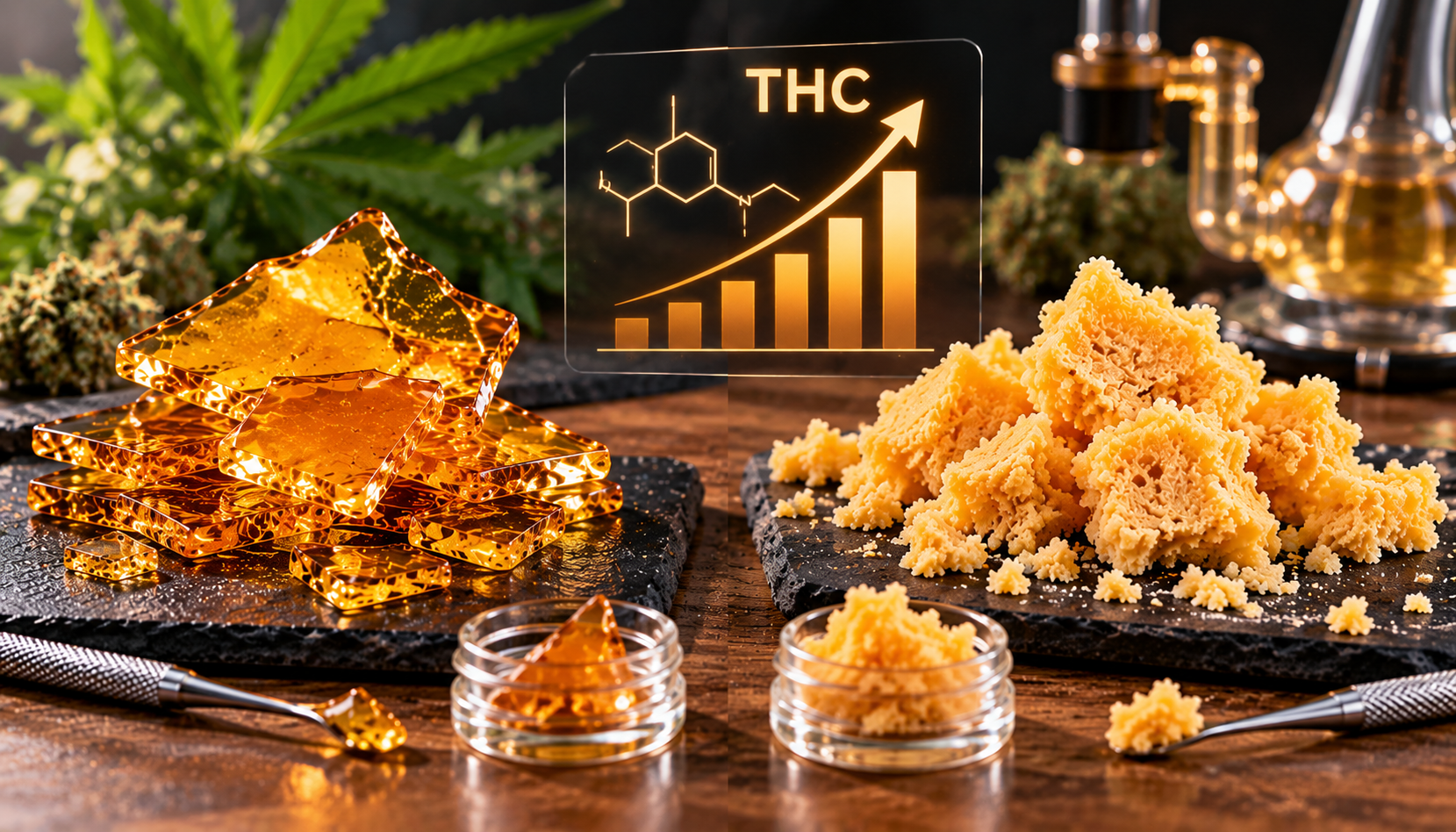
One of the most common questions in the Shatter vs Crumble debate is which concentrate contains more THC.
There is no universal winner.
Both can contain substantially higher cannabinoid concentrations than conventional cannabis flower. The actual potency depends on the individual batch, starting material, extraction process, and final composition.
Two products that look nearly identical can have different cannabinoid profiles. Conversely, a crumble and shatter made from similar material could have comparable THC concentrations.
For that reason, consumers should look at reliable laboratory information where available rather than judging strength from texture, clarity, or color.
High-potency cannabis deserves additional caution. Greater THC exposure can increase the likelihood of unwanted effects such as anxiety, dizziness, confusion, rapid heart rate, nausea, and impaired coordination.
Flavor and Terpenes
Terpenes contribute significantly to the sensory experience of cannabis concentrates.
These aromatic compounds produce characteristics commonly described as citrusy, fruity, pine-like, floral, earthy, herbal, spicy, or fuel-like.
When comparing Shatter vs Crumble, consumers sometimes assume crumble is always more flavorful. In practice, the situation is more complicated.
Terpene preservation depends on the starting cannabis and how carefully the extract is manufactured and stored. Because terpenes are volatile compounds, excessive heat and poor storage can diminish them.
A fresh, carefully processed shatter may therefore offer better aroma than an older or poorly stored crumble, and the opposite can also be true.
Consumers interested primarily in flavor should examine terpene information when available rather than making a decision based exclusively on consistency.
Texture and Handling
Texture is where the two concentrates differ most clearly.
Shatter generally has a smooth, rigid surface. At suitable temperatures, pieces can break away relatively cleanly. However, temperature changes can significantly affect its behavior. Excessive warmth may cause it to soften and become sticky, while colder conditions can make it especially brittle.
Crumble behaves differently.
Its dry, porous structure means it can usually be separated without needing to snap a solid sheet. Some consumers find this consistency more convenient, while others prefer the cleaner visual presentation of shatter.
Neither texture represents an objective quality advantage. The better option largely depends on personal handling preferences and the quality of the specific product.
Appearance and Quality
Shatter’s transparent golden appearance has historically been associated with premium concentrates, but visual clarity should not be treated as a complete measure of quality.
Likewise, crumble doesn’t need to look perfectly pale or uniform to be a good product.
Cannabis genetics naturally contain different pigments, cannabinoids, terpenes, lipids, and other compounds that can influence appearance. Processing and storage also affect color and consistency.
When evaluating Shatter vs Crumble, reliable product information is more useful than appearance alone.
Where regulated testing is available, consumers can examine cannabinoid potency and contaminant screening. Clear labeling, proper packaging, identifiable batch information, and appropriate storage are also meaningful indicators.
Potential Benefits of Cannabis Concentrates
The primary practical characteristic of concentrates is exactly what their name suggests: concentration.
They can contain considerably higher cannabinoid levels per unit of weight than cannabis flower. Experienced consumers may therefore use much smaller quantities of material to obtain substantial cannabinoid exposure.
Concentrates can also preserve interesting strain-specific characteristics, particularly when manufacturers prioritize terpene retention.
Another benefit is variety.
Modern concentrate categories provide consumers with dramatically different textures and sensory profiles, including shatter, crumble, wax, budder, live resin, rosin, diamonds, and sauce.
The Shatter vs Crumble comparison is therefore part of a larger question about what someone values in a cannabis extract: consistency, aroma, cannabinoid profile, terpene expression, or ease of handling.
Storage Considerations
Storage can significantly influence concentrate quality.
Heat can soften shatter and alter its characteristic consistency. High temperatures can also accelerate the loss of volatile aromatic compounds in both shatter and crumble.
Light and oxygen can contribute to chemical degradation over time as well.
Concentrates should generally remain in suitable sealed containers and be stored according to the manufacturer’s directions, away from unnecessary heat and direct sunlight.
Crumble’s loose structure also makes secure packaging particularly useful because small fragments can scatter easily.
Proper storage doesn’t make a product last indefinitely, but it can help preserve its intended aroma, texture, and overall quality.
Shatter vs Crumble for Beginners
People new to cannabis concentrates should be particularly mindful of potency.
Both shatter and crumble can deliver much higher concentrations of THC than they may be accustomed to from flower. This can make accidentally consuming more THC than intended easier.
There is no reason for inexperienced consumers to pursue the product with the highest available THC percentage.
A product’s terpene profile, cannabinoid balance, quality testing, and individual tolerance can be more useful considerations.
Anyone who experiences unpleasant effects from THC should stop consuming more and move to a safe, comfortable environment. Severe or persistent symptoms warrant appropriate medical assistance.
Cannabis should never be combined with driving or other activities requiring unimpaired judgment and coordination.
Which One Should You Choose in 2026?
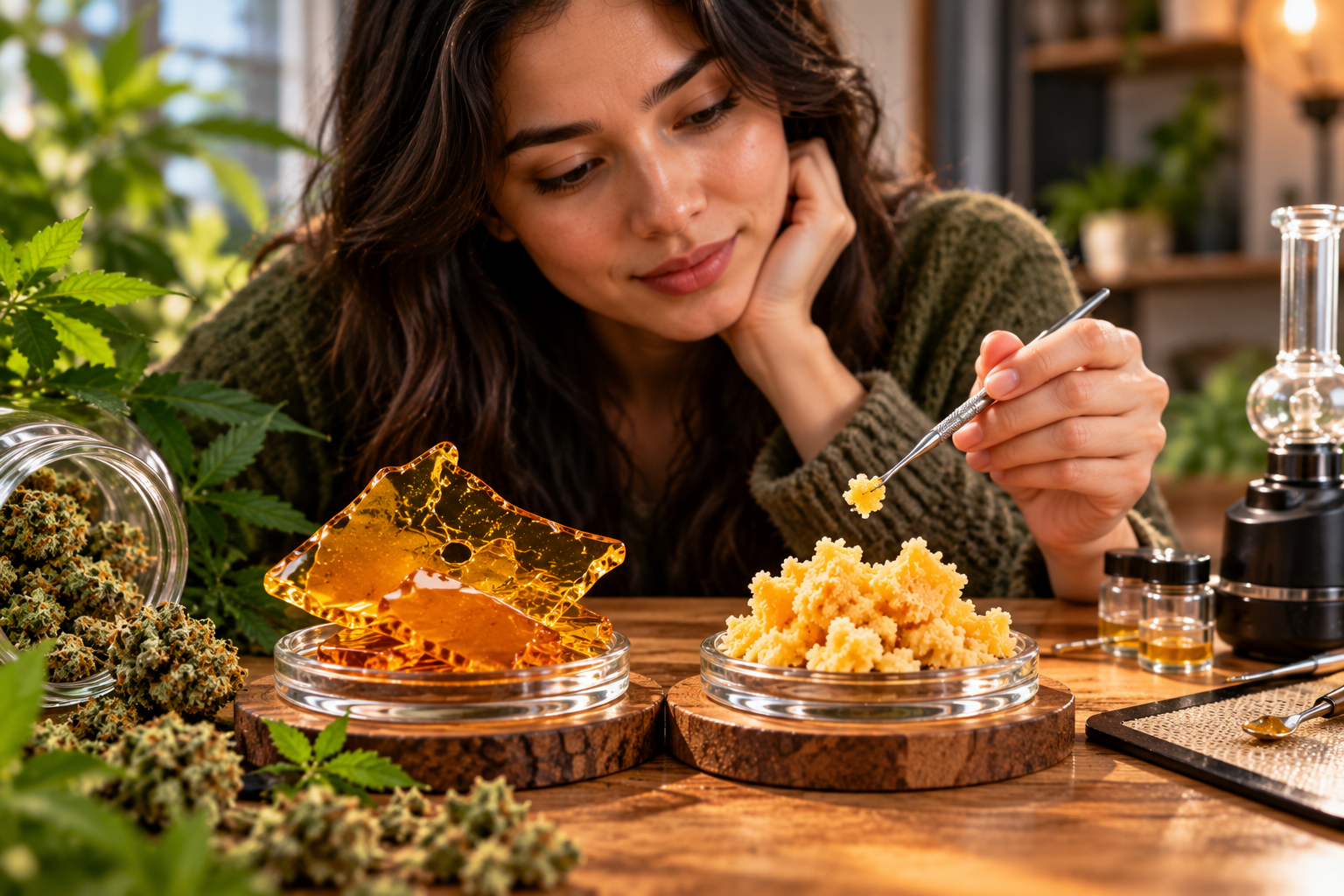
Ultimately, the Shatter vs Crumble decision comes down to the individual product and personal priorities.
Shatter may appeal to consumers who enjoy a firm, glass-like concentrate with a visually clean appearance. Crumble may appeal to those who prefer a softer, easily separated texture.
Consumers focused on flavor should compare terpene profiles and freshness. Those focused on cannabinoid strength should examine tested potency rather than assuming one concentrate category is stronger.
Most importantly, quality should come before appearance or headline THC numbers.
Transparent product information, responsible manufacturing, appropriate packaging, freshness, and reliable testing are better purchasing criteria than simply choosing whichever concentrate looks most impressive.
Shatter vs Crumble: Final Thoughts
The Shatter vs Crumble comparison highlights how processing can transform cannabis extracts into products with very different physical characteristics. Shatter is generally hard, translucent, and brittle, while crumble has a dry, porous consistency that breaks apart easily.
Both can provide concentrated cannabinoids and distinctive terpene profiles, and both can vary considerably in quality and potency. Neither is inherently better—the right choice depends on the specific product, desired texture, aroma, cannabinoid composition, and individual experience with concentrates.
For legal-age adults shopping where cannabis sales are permitted, BC Medi Chronic can be considered as an online destination for exploring shatter, crumble, and other cannabis concentrates. When comparing products, prioritize clearly stated potency, terpene information, freshness, appropriate packaging, and quality testing rather than choosing solely by appearance or the highest THC percentage.