
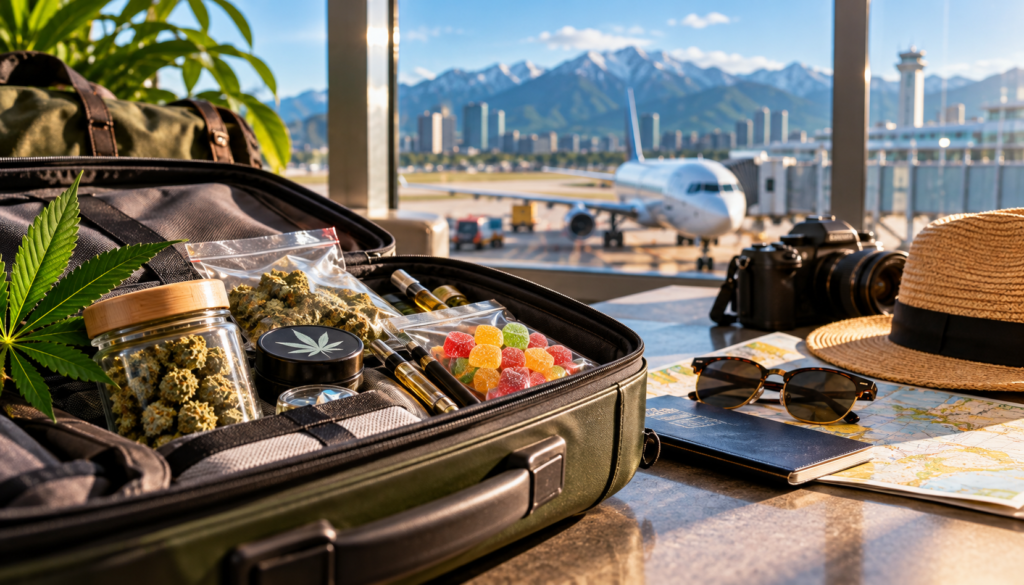
As cannabis legalization continues to evolve around the world, more travelers are asking important questions about bringing cannabis on vacation, visiting cannabis-friendly destinations, and understanding local regulations. Whether planning a weekend getaway within Canada or an international adventure, understanding the relationship between Cannabis and Travel is essential for avoiding legal complications and enjoying a responsible trip.
Although cannabis is legal for recreational use in Canada, the rules become more complicated when traveling between provinces, boarding airplanes, crossing international borders, or visiting countries with different cannabis policies.
For cannabis enthusiasts, knowing where cannabis is permitted, how possession limits work, and what restrictions apply to transportation can make a significant difference.
This comprehensive guide explores Cannabis and Travel in 2026, including Canadian cannabis laws, domestic flights, international restrictions, cannabis tourism, safety considerations, and practical advice for responsible travelers.
Understanding Cannabis and Travel Laws in 2026
Cannabis regulations vary considerably depending on the country, province, state, or municipality you’re visiting.
Canada legalized recreational cannabis federally in October 2018, allowing adults to purchase, possess, and consume cannabis under regulated conditions. However, individual provinces and territories maintain additional rules concerning minimum age, retail sales, public consumption, and transportation.
Internationally, the legal landscape is far less consistent.
Some destinations permit limited adult cannabis possession, while others authorize only medical cannabis or maintain strict prohibitions. Even countries that have introduced legalization or decriminalization may restrict retail sales, public consumption, or possession by tourists.
Understanding these differences is one of the most important aspects of Cannabis and Travel.
Travelers should always verify current regulations through official government resources before departure.
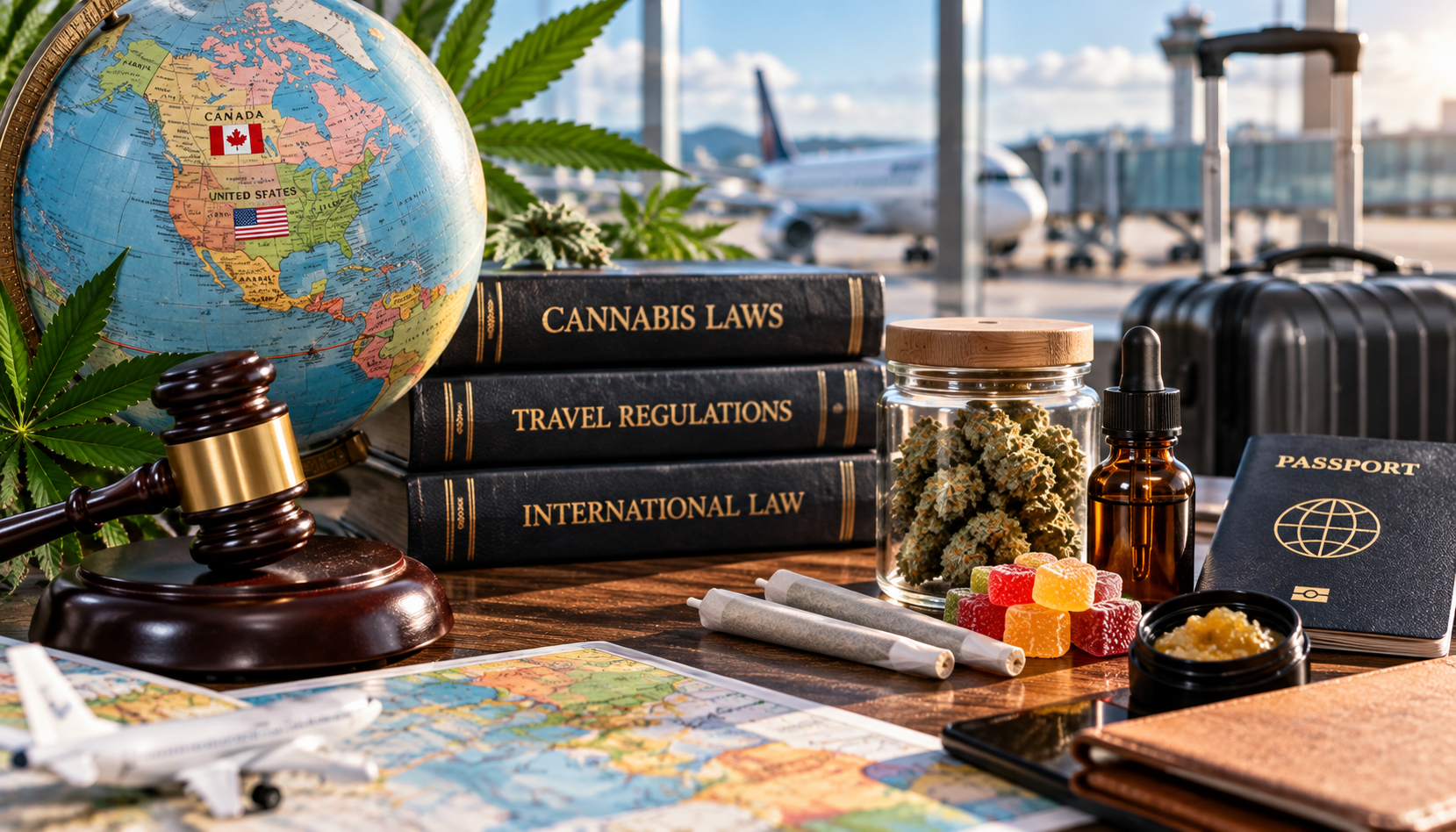
Can You Travel With Cannabis Within Canada?
Traveling domestically within Canada is generally more straightforward than crossing international borders.
Under federal law, adults may possess up to 30 grams of dried cannabis, or its equivalent in other cannabis products, in public.
However, provincial and territorial regulations may impose additional restrictions.
For example, the legal age for recreational cannabis is generally 19 in most Canadian provinces, 18 in Alberta, and 21 in Quebec.
Travelers should also understand that cannabis possession limits apply to equivalent quantities of different cannabis products, including edibles, concentrates, and oils.
A product’s physical weight doesn’t necessarily equal its dried-cannabis equivalent under federal regulations.
When considering Cannabis and Travel within Canada, checking the rules of both your departure location and destination is a sensible precaution.
Flying With Cannabis on Domestic Canadian Flights
One of the most frequently asked questions about Cannabis and Travel concerns flying with marijuana.
On domestic flights entirely within Canada, cannabis may generally be transported in carry-on or checked baggage, provided the traveler complies with applicable laws.
However, several important considerations apply.
Travelers must remain within legal possession limits and follow airline and airport requirements. Cannabis liquids and oils in carry-on luggage are also subject to applicable aviation security rules.
Cannabis cannot be consumed or smoked during a flight.
Passengers should also be aware that flight diversions can create complications. If a domestic flight unexpectedly lands outside Canada, cannabis possession could become subject to another country’s laws.
For current security screening guidance, travelers can consult the Canadian Air Transport Security Authority (CATSA).
Can You Travel Internationally With Cannabis?
International travel presents substantially greater legal risks.
Even though recreational cannabis is legal in Canada, transporting cannabis across the Canadian international border is generally illegal without specific authorization.
This restriction applies whether travelers are entering or leaving Canada.
It also applies to cannabis oils, edibles, concentrates, and products containing THC or CBD.
Importantly, the restriction remains in place even when traveling to a destination where cannabis possession is legal.
For example, a traveler cannot simply bring cannabis from Canada into a U.S. state that permits recreational marijuana.
The laws governing international borders are separate from the laws governing cannabis possession within a particular jurisdiction.
Anyone planning international travel should leave cannabis products behind unless they have the necessary specific legal authorization.
Cannabis and Travel in the United States
The United States presents a complicated legal environment because state and federal cannabis laws differ.
Many states have legalized adult recreational cannabis, while others permit only medical use or continue to prohibit marijuana.
However, marijuana remains subject to federal restrictions, creating important complications for airports, federal property, and international border crossings.
The Transportation Security Administration (TSA) focuses primarily on aviation security, but cannabis discovered during screening may be referred to law enforcement.
State legalization should not be interpreted as permission to transport marijuana across state lines or international borders.
Travelers interested in cannabis-friendly U.S. destinations should research local possession limits, consumption restrictions, purchasing requirements, and accommodation policies.
Cannabis Tourism: A Growing Travel Trend
Cannabis tourism refers to travel experiences influenced by interest in cannabis culture, education, cultivation, or legally available cannabis products.
As cannabis policies evolve, some destinations have developed tourism-related experiences, including educational tours, cultivation discussions, cannabis museums, and certain licensed hospitality offerings.
For some visitors, cannabis tourism provides an opportunity to learn about the plant’s history, cultural significance, and changing legal status.
Others are interested in exploring the differences between regional cannabis markets, product formats, and regulations.
However, the availability of cannabis-related tourism activities doesn’t necessarily mean that public consumption or cannabis use in hotels is permitted.
The most responsible approach is to choose activities that comply with local laws and clearly stated venue policies.
Benefits of Understanding Cannabis and Travel Regulations
Learning about cannabis travel laws offers several practical advantages.
First, it helps travelers avoid fines, confiscation, criminal charges, and unexpected legal difficulties.
Second, understanding local regulations makes vacation planning easier. Travelers can choose accommodations and activities with greater confidence while respecting local rules.
Third, legal awareness supports responsible cannabis tourism by encouraging visitors to purchase products only through authorized retailers.
Finally, understanding Cannabis and Travel helps protect other travelers, accommodation providers, and communities from problems caused by prohibited consumption or impaired behavior.
The primary benefit is not easier access to cannabis, but safer, better-informed travel decisions.
Cannabis and Hotel Accommodations
Finding cannabis-friendly accommodation requires more research than simply identifying a destination where marijuana is legal.
Hotels, vacation rentals, and resorts may prohibit cannabis smoking or vaping even in jurisdictions where adult possession is permitted.
Some properties enforce complete smoke-free policies, while others restrict consumption to designated outdoor spaces.
Travelers should review accommodation policies before booking and avoid assuming that a private room automatically permits cannabis consumption.
Violating these policies may result in cleaning fees, additional charges, or removal from the property.
Safety Tips for Cannabis Consumers While Traveling
Responsible travel requires attention to both legal compliance and personal safety.
-
Research destination laws: Check possession limits, minimum ages, purchasing rules, and public consumption restrictions.
-
Never cross international borders with cannabis: Canadian legalization does not override import and export restrictions.
-
Avoid impaired driving: Cannabis can affect judgment, coordination, and reaction time.
-
Choose authorized retailers: Legal products are subject to regulatory requirements.
-
Respect public spaces: Beaches, parks, hotels, and attractions may have additional consumption restrictions.
-
Store products securely: Keep cannabis away from children, pets, and unauthorized individuals.
Travelers should also remember that cannabis edibles may take longer to produce noticeable effects than inhaled cannabis, increasing the risk of consuming more than intended.
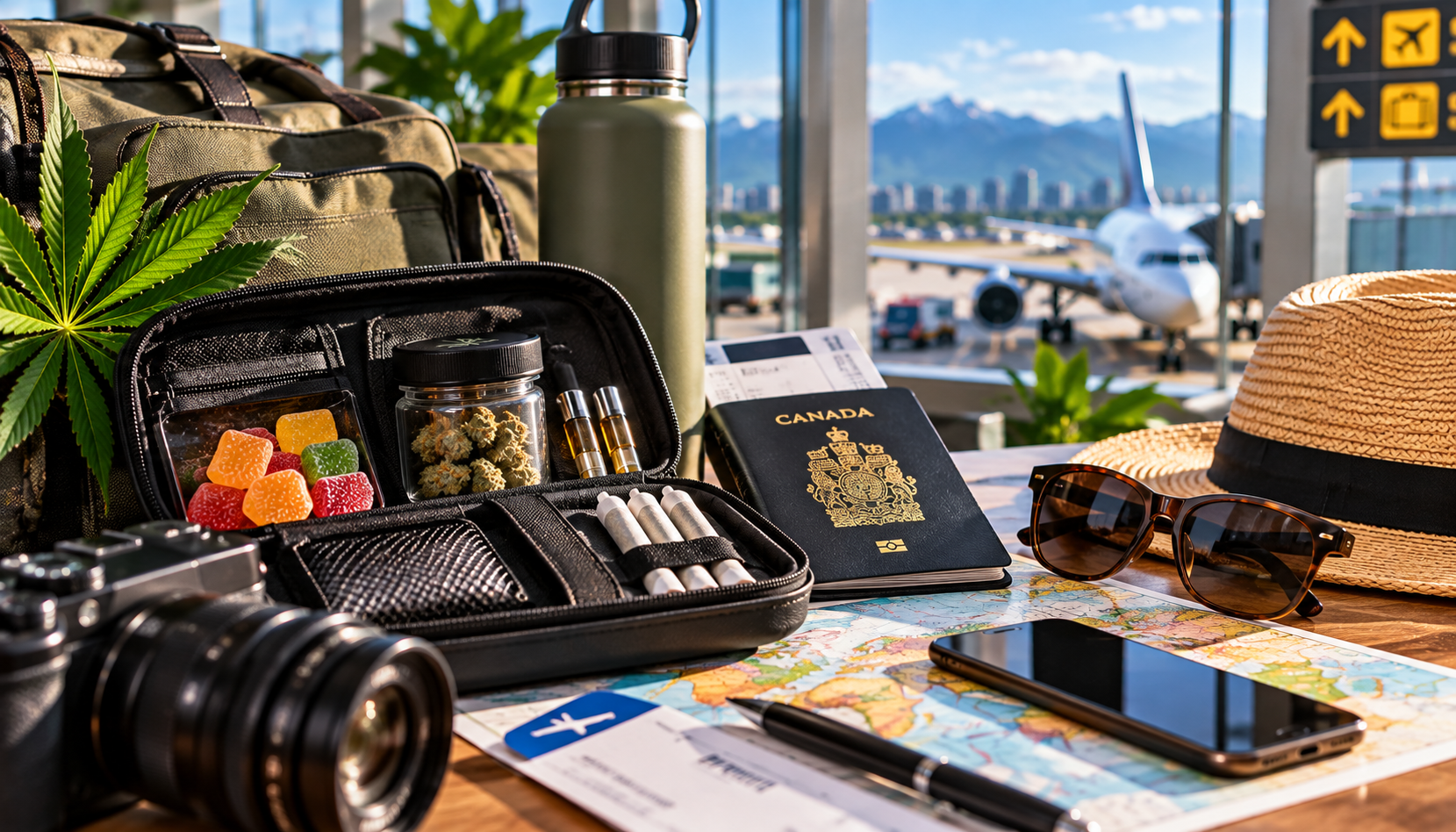
Medical Cannabis and International Travel
Medical cannabis users face additional considerations.
Having a prescription or medical authorization does not automatically permit international transportation.
Canadian government guidance states that crossing the border with cannabis generally requires specific authorization from Health Canada and the relevant authorities in countries visited or transited. Such exemptions are limited, and ordinary medical documentation is not sufficient.
Travelers who rely on medical cannabis should consult their healthcare provider and relevant authorities well before departure to discuss lawful treatment arrangements.
Choosing a Legal Cannabis Retailer
When purchasing cannabis in Canada, choosing an authorized retailer is an important part of responsible consumption.
Licensed retailers operate under provincial or territorial requirements, while federally licensed producers must comply with production and product safety regulations.
Consumers should look for proper age verification, compliant packaging, clear cannabinoid labeling, and legitimate retail authorization.
Health Canada maintains information about authorized cannabis retailers across Canada, helping consumers distinguish regulated businesses from unauthorized sellers.
Online availability alone does not establish that a retailer is legally authorized to sell or ship cannabis to a particular destination.
Final Thoughts: Cannabis and Travel in 2026
Understanding Cannabis and Travel is essential for anyone planning a vacation, business trip, or domestic journey involving cannabis-related interests.
While Canada permits adult recreational cannabis possession under regulated conditions, international borders remain a major legal restriction. Domestic travelers must also consider provincial laws, airport security rules, accommodations, and public consumption policies.
The best approach is to research local regulations, respect possession limits, avoid impaired driving, and purchase cannabis only from authorized sources.
For Canadian adults interested in exploring cannabis products before or after their travels, BC Medi Chronic is an online dispensary option they may wish to research. However, its current licensing and authorization to sell in a particular province should be verified before ordering; it cannot be established as the best legal retailer without that confirmation.
Whether exploring cannabis culture or simply planning a relaxing vacation, responsible decisions and accurate legal information are the foundations of a safer travel experience.