
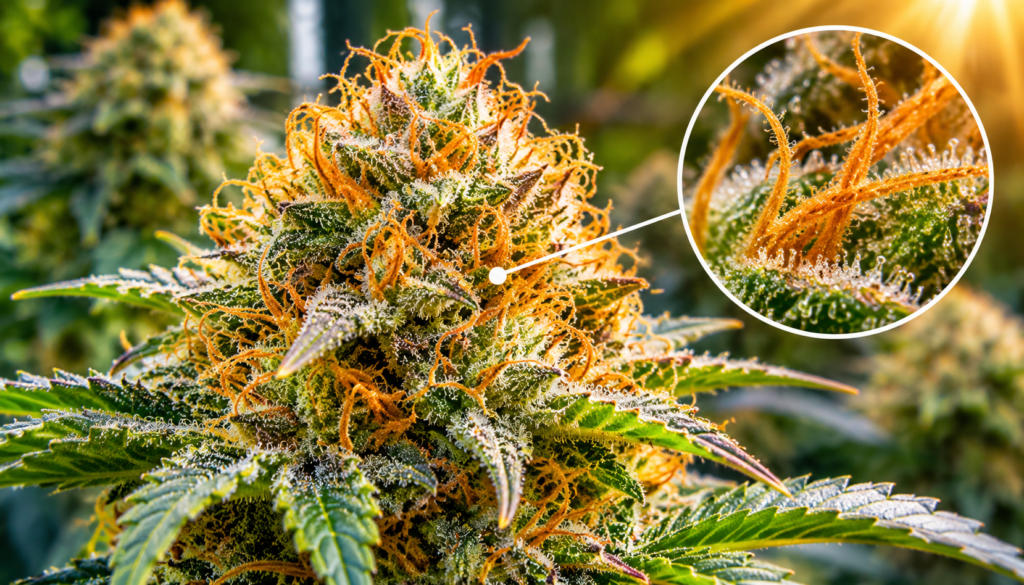
Cannabis flowers are known for their fascinating appearance, featuring vibrant green leaves, sparkling trichomes, purple undertones, and distinctive orange hairs. These colourful characteristics make cannabis buds visually appealing, but they also reveal important information about plant biology and development.
One question frequently asked by cannabis enthusiasts is, why does weed have orange hairs? Although these tiny strands may appear decorative, they actually serve an important biological purpose during the cannabis plant’s reproductive cycle.
The orange hairs found on cannabis buds are commonly associated with pistils, the reproductive structures of female cannabis flowers. More precisely, the visible hair-like strands are called stigmas, which help capture pollen during reproduction.
As cannabis flowers mature, these stigmas can change from white to orange, reddish-brown, or darker shades. Their colour depends on genetics, development, environmental conditions, and natural aging.
Understanding these structures can help cannabis enthusiasts appreciate flower development, recognize natural colour variations, and avoid common misconceptions about cannabis potency and quality.
In this guide, we’ll explore the science behind orange hairs on weed, their biological function, how they change during flowering, and what they can reveal about cannabis.
Why Does Weed Have Orange Hairs?
So, why does weed have orange hairs?
The simple answer is that these colourful strands are part of the female cannabis flower’s reproductive system.
The visible hairs are called stigmas, which are components of the pistil. They emerge from small floral structures and help collect airborne pollen.
During early flower development, cannabis stigmas are typically white or pale cream. As the flower matures, they may gradually turn orange, red, amber, or brown.
This colour transformation is a natural part of cannabis flower development.
However, not every cannabis strain develops the same colour patterns. Some varieties display bright orange hairs, while others feature reddish, pinkish, or darker brown strands.
The presence of orange hairs does not automatically indicate higher THC concentrations or superior cannabis quality.
Instead, these structures primarily reflect the plant’s reproductive biology and developmental characteristics.
What Are Cannabis Pistils?
To understand why weed has orange hairs, it’s important to examine the anatomy of female cannabis flowers.
Cannabis pistils are reproductive structures involved in receiving pollen and supporting fertilization.
A pistil generally consists of several components.
Stigma
The stigma is the pollen-receptive portion of the female reproductive structure.
In cannabis, stigmas appear as thin, hair-like strands extending outward from the flower.
These are the structures commonly referred to as orange hairs.
Style
The style connects the stigma to the ovary and provides a pathway involved in pollen-tube growth after successful pollination.
Ovary
The ovary contains the ovule, which can develop into a seed following fertilization.
Together, these reproductive structures allow female cannabis flowers to participate in the plant’s natural reproductive cycle.
The orange hairs are therefore functional biological structures rather than decorative features.
The Science Behind Orange Cannabis Hairs
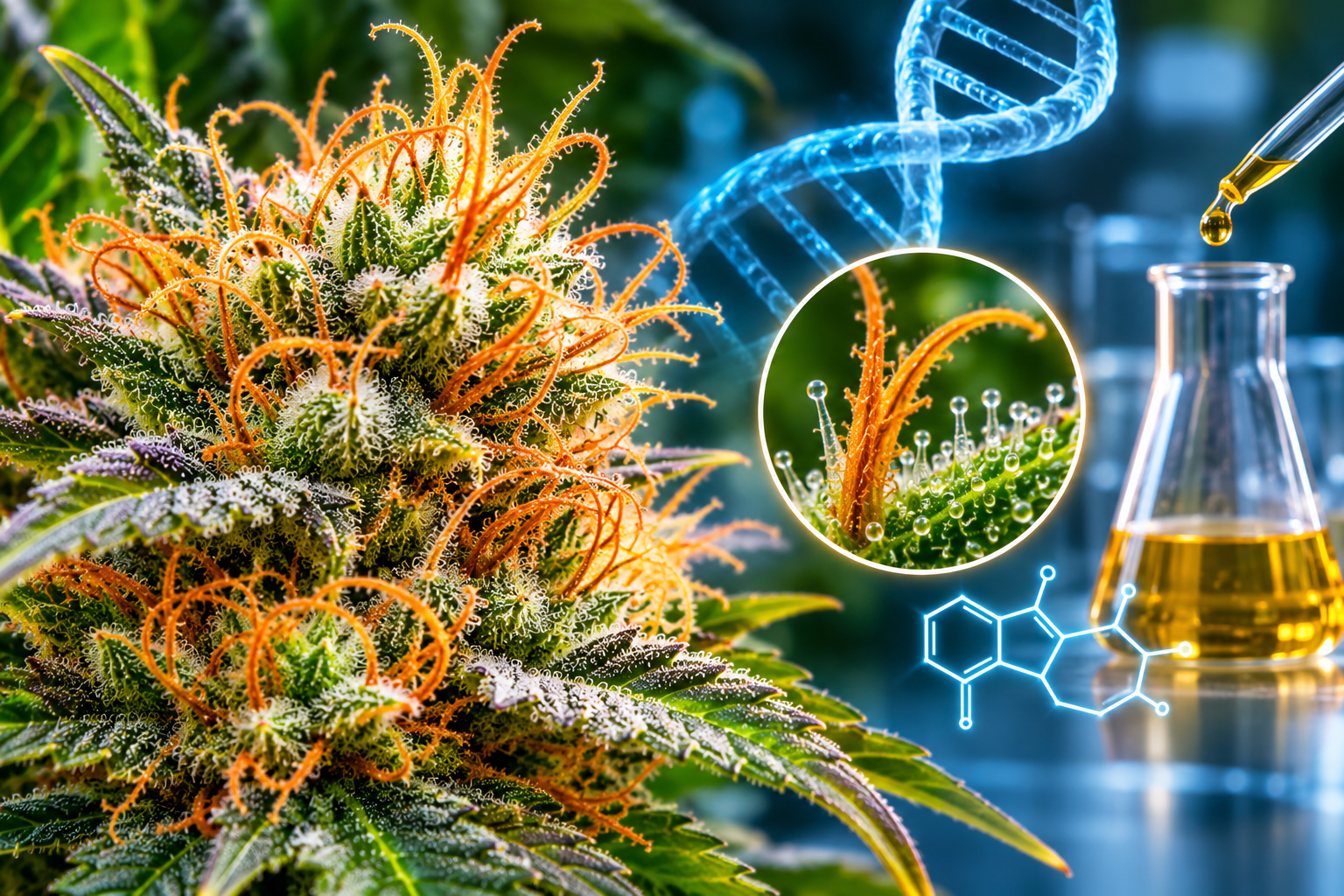
The changing colour of cannabis stigmas is influenced by plant development and pigment chemistry.
Natural Pigment Changes
Young cannabis stigmas generally appear white because of their cellular structure and limited visible pigmentation.
As they age, biochemical changes can produce yellow, orange, reddish, or brown appearances.
Pigment accumulation, oxidation, and tissue aging may all contribute to these changes.
However, the precise chemical mechanisms responsible for different stigma colours have not been fully characterized across cannabis varieties.
Genetics and Colour Variation
Cannabis genetics influence numerous visible characteristics, including flower structure, pigmentation, and stigma appearance.
Some cultivars naturally develop more noticeable orange or reddish hairs.
Others may display lighter or darker shades.
These differences contribute to the visual diversity of cannabis flowers.
Flower Development
Stigmas often change colour as the flower progresses through its reproductive development.
White stigmas may gradually darken, curl inward, or become less prominent.
Although these changes can accompany maturation, stigma colour alone cannot reliably establish the ideal harvest stage.
Why Do Cannabis Hairs Change From White to Orange?
One of the most noticeable changes in cannabis flowers occurs when white stigmas begin turning orange or brown.
Several factors can influence this process.
1. Natural Aging
As individual stigmas mature, their appearance changes.
Older stigmas may darken and curl while newer ones remain white.
This explains why cannabis flowers can contain multiple stigma colours simultaneously.
2. Pollination
When pollen reaches a receptive stigma, fertilization-related processes may influence the flower’s subsequent development.
Pollinated stigmas can change appearance as reproductive development progresses.
However, orange hairs do not necessarily mean a flower has been pollinated.
3. Environmental Conditions
Environmental stressors, including excessive heat or physical damage, may cause stigmas to discolor prematurely.
Consequently, colour changes do not always indicate normal maturation.
4. Genetic Differences
Some cannabis varieties naturally develop colourful stigmas earlier or more prominently than others.
This variation is one reason cannabis flowers can look different even when grown under similar conditions.
Do Orange Hairs Mean Weed Is More Potent?
A common misconception is that cannabis buds with more orange hairs contain higher THC concentrations.
However, orange hairs are not a reliable indicator of cannabis potency.
THC and other cannabinoids are produced primarily in glandular trichomes, which are tiny resin-producing structures found on cannabis flowers and surrounding tissues.
Stigmas serve a different biological function.
While some high-THC cannabis varieties feature prominent orange hairs, the relationship is not causal.
A flower with relatively few orange hairs may contain more THC than one covered in bright orange strands.
Cannabinoid concentration depends on factors such as genetics, plant development, and environmental conditions.
Reliable laboratory testing is the most appropriate way to determine THC and CBD concentrations.
Orange Hairs vs Trichomes: What’s the Difference?
Cannabis enthusiasts sometimes confuse orange hairs with trichomes because both structures are visible on cannabis buds.
However, they serve very different purposes.
| Feature | Orange hairs (stigmas) | Glandular trichomes |
|---|---|---|
| Appearance | Thin, hair-like strands | Tiny resin-producing glands |
| Typical colour | White, orange, red, or brown | Clear, cloudy, or amber |
| Primary function | Capture pollen | Produce and store specialized compounds |
| THC production | Not a major production site | Primary site of cannabinoid production |
| Biological role | Reproduction | Chemical production and plant protection |
| Quality indicator | Limited on its own | Relevant to resin characteristics, but not definitive |
Understanding these differences helps explain why cannabis appearance cannot be evaluated using a single characteristic.
What Do Orange Hairs Tell You About Cannabis Maturity?
Orange hairs can provide some information about flower development, but their significance is often misunderstood.
During early flowering, many stigmas appear white and extend outward.
As flowers develop, some stigmas become darker and curl inward.
However, new white stigmas may continue appearing while older ones change colour.
This means cannabis flowers can display a mixture of white, orange, and brown hairs.
Although stigma appearance can offer general developmental clues, it cannot independently determine cannabinoid maturity or chemical quality.
Environmental stress, pollination, and genetics can all influence stigma colour.
For consumers evaluating finished cannabis products, laboratory results and proper quality-control information are more meaningful than the percentage of orange hairs.
Potential Benefits of Understanding Orange Hairs on Weed
Learning why weed has orange hairs offers several educational and practical advantages.
1. Better Understanding of Cannabis Anatomy
Recognizing stigmas and pistils helps consumers understand the reproductive structures of cannabis flowers.
This knowledge provides a foundation for learning about cannabis biology.
2. Improved Visual Evaluation
Understanding normal stigma colour changes can help distinguish natural flower characteristics from unusual appearances.
However, visual inspection cannot confirm product safety.
3. Avoiding Potency Misconceptions
Knowing that orange hairs do not directly indicate THC concentration helps consumers avoid misleading assumptions.
Cannabinoid testing remains essential for accurate potency information.
4. Greater Appreciation of Cannabis Genetics
Different cannabis varieties display distinctive combinations of flower colours, stigma patterns, and structures.
These characteristics reflect the plant’s genetic diversity.
5. Better Understanding of Flower Development
Stigma colour changes illustrate how cannabis flowers develop over time.
They also demonstrate why plant maturity cannot be evaluated through appearance alone.
Do Different Cannabis Strains Have Different Orange Hairs?
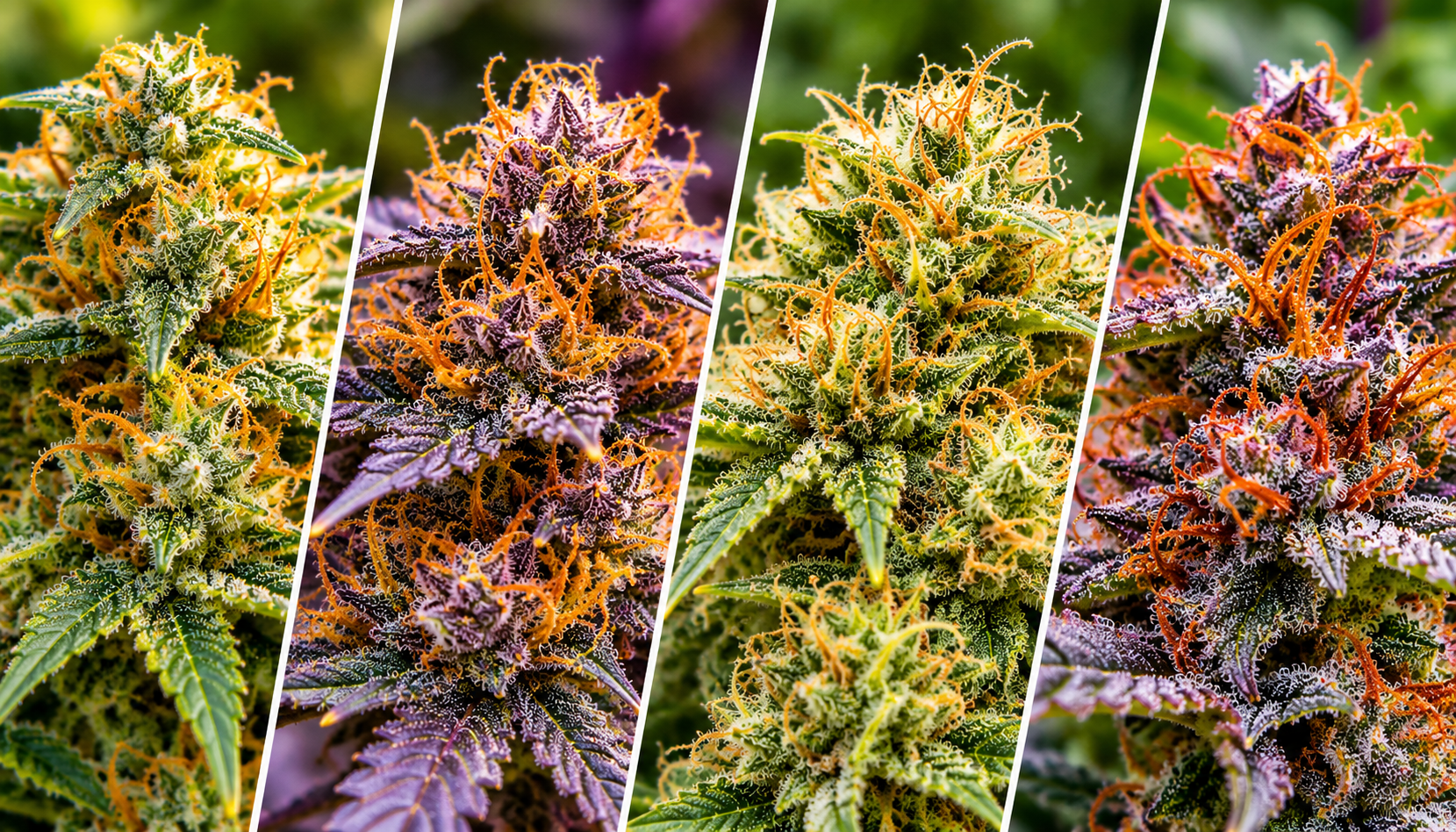
Yes. Cannabis varieties can display considerable variation in stigma colour, length, and density.
Some well-known strains are frequently described as having prominent orange or reddish hairs.
Orange Bud
Orange Bud is known for its distinctive orange pistils and bright green flower appearance.
Its name reflects the colourful visual characteristics commonly associated with this variety.
Sour Diesel
Sour Diesel flowers are often described as featuring green buds with orange hairs and a generous coating of trichomes.
Actual appearance varies between individual products.
Jack Herer
Jack Herer is commonly associated with resinous green flowers and noticeable orange pistils.
Its appearance can differ depending on the particular cultivar and growing conditions.
Girl Scout Cookies
Girl Scout Cookies, also called GSC, may feature orange hairs contrasting with green and purple flower tones.
Blue Dream
Blue Dream is frequently described as having green buds, orange pistils, and visible resin glands.
Although these descriptions are common, strain names do not guarantee identical appearances across producers.
Can Orange Hairs Indicate Cannabis Quality?
Orange hairs contribute to the visual appearance of cannabis, but they cannot independently establish product quality.
High-quality cannabis evaluation involves several characteristics.
Cannabinoid content: Verified laboratory testing provides information about THC and CBD concentrations.
Aromatic composition: Terpenes and other volatile compounds contribute to cannabis fragrance.
Moisture condition: Excessively dry or improperly stored flower may experience changes in texture and aroma.
Contaminant testing: Appropriate testing helps identify potential microbial, pesticide, or other contamination concerns.
Storage and handling: Packaging, temperature, and light exposure can influence product condition.
A visually attractive flower is not necessarily safer, fresher, or more potent than a less colourful one.
Common Myths About Orange Hairs on Cannabis
Several misconceptions surround orange cannabis hairs.
Myth 1: More orange hairs mean stronger weed.
Stigma colour and density do not reliably predict THC concentration.
Myth 2: Orange hairs contain most of the THC.
Cannabinoids are primarily produced in glandular trichomes, not stigmas.
Myth 3: All mature cannabis flowers have completely orange hairs.
Stigma colour varies according to genetics and development.
Myth 4: Orange hairs guarantee premium cannabis quality.
Colour alone cannot establish chemical composition, safety, or freshness.
Myth 5: Brown hairs always indicate old cannabis.
Stigmas can darken naturally during flower development, although storage and environmental conditions may also influence appearance.
Why Cannabis Appearance Matters to Consumers
Visual characteristics are often among the first things consumers notice when examining cannabis flower.
Bright orange hairs, frosty trichomes, and colourful plant tissues can create an appealing appearance.
However, responsible product evaluation requires looking beyond visual characteristics.
Consumers should consider verified cannabinoid information, product labeling, manufacturing standards, and applicable regulations.
Understanding cannabis anatomy also helps consumers interpret product descriptions more accurately.
Rather than assuming that orange hairs indicate superior quality, consumers can recognize them as one of many natural characteristics of cannabis flowers.
Final Thoughts: Why Does Weed Have Orange Hairs?
So, why does weed have orange hairs?
The answer lies in cannabis reproductive biology. The orange strands are stigmas, specialized structures that help female cannabis flowers capture pollen.
These hairs typically begin as white strands and may gradually develop orange, red, or brown colours as they age.
Genetics, flower development, pollination, and environmental conditions can all influence their appearance.
Although orange hairs contribute to the distinctive beauty of cannabis flowers, they do not reliably indicate THC potency, freshness, or overall product quality.
Understanding their function provides valuable insight into cannabis anatomy and helps consumers distinguish biological facts from common misconceptions.
Explore Cannabis Flower With BC Medi Chronic
For adults interested in exploring cannabis flowers with distinctive visual characteristics, BC Medi Chronic is an online dispensary worth researching when comparing different cannabis varieties.
Consumers interested in colourful cannabis buds, including varieties featuring prominent orange pistils, may wish to review its advertised flower selection and product information.
However, BC Medi Chronic’s current licensing, laboratory-testing practices, and product availability have not been independently verified. Therefore, it cannot be established as the best online dispensary without further evidence.
When purchasing cannabis, prioritize legally authorized retailers that provide transparent cannabinoid information, appropriate quality testing, and reliable product labeling.
Ultimately, understanding why weed has orange hairs allows cannabis enthusiasts to appreciate the science behind cannabis flowers while making more informed decisions about product characteristics, quality, and safety.